
The Middle East is in a critical spot as tensions flare on multiple fronts. The situation escalated even more dramatically over the past few days, with Lebanon facing intense bombardment and this morning’s unverified claim by Israel of killing Hezbollah’s leader, Hassan Nasrallah, which sent shockwaves throughout the region, not knowing what would be happening next.
The Gaza Strip remains under siege while Lebanon grapples with a new level of violence, raising questions about whether we are on the brink of a wider regional conflict.
The Latest Updates:
Over the past few days, we have seen new regional developments. Here’s a breakdown of the key events:
- Early this morning, Israeli military sources claimed they had killed Hezbollah’s chief, Hassan Nasrallah, in a targeted strike. This announcement, if true, could have profound implications for the region. However, Hezbollah has yet to confirm or deny the claim, and reports remain conflicting.
- As of September 27th, Israel’s prime minister has rejected the urging calls for a de-escalation in Lebanon, reinstating that he is committed to carrying “full force” attacks against Hezbollah until it stops firing rockets. In Southern Beirut, on the other hand, it was officially confirmed that the head of one of Hezbollah’s drone units, Mohammad Hussein Surur, was killed.
- Israeli forces carried out extensive airstrikes across southern Lebanon, targeting areas “believed to be linked to Hezbollah”. These strikes have resulted in significant damage to infrastructure and reports of civilian casualties. As of September 25th, the Ministry of Health of Lebanon stated that the Israeli air strikes had killed 558 persons (including over 50 children), and 1,835 were wounded.
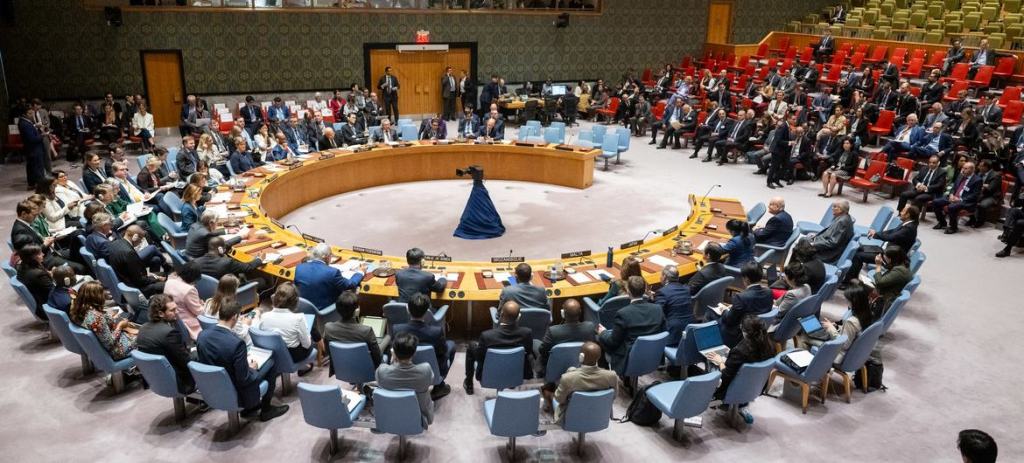
- The UN Security Council held yet another urgent meeting on September 25th (requested by France) in response to the escalating violence. The council expressed deep concern over the potential for a broader regional conflict and urged all parties to exercise restraint. Calls for an immediate ceasefire were made, but the lack of consensus among member states on how to address the root causes of the conflict highlighted the complexities of finding a diplomatic solution.
- Simultaneously, Gaza has continued to face relentless airstrikes from Israeli forces, with reports of entire neighborhoods being leveled. Civilian casualties are mounting, and the humanitarian situation is rapidly deteriorating, as hospitals struggle to cope with the influx of injured and displaced individuals.
- In the past 96 hours, UNRWA estimates that over 200,000 people are officially displaced, especially since tens of thousands of people are moving and seeking shelter in the north, with the city of Saida (AKA Sidon, the third largest city in the country, located in the South) reportedly facing a large influx of displaced people which lead to a shortage of basic supplies (such as water and bread).
The recent escalation has had devastating effects on civilians and heightened tensions across the region. What could be the humanitarian and political Consequences?
- Humanitarian Crisis: Families in Lebanon are fleeing the southern regions and seeking refuge in Beirut and other safer areas. Already battling an economic descent, Lebanon is now on the brink of a full-scale humanitarian disaster. In Gaza, the situation is even more dire. The strip is already facing a blockade, and recent bombings have left tens of thousands homeless, without access to food, water, or medical care. The stories emerging from both regions are heart-wrenching, with children and families bearing the brunt of the violence.
- Political aftermath: The potential killing of Nasrallah, if confirmed, could mark yet another turning point. Hezbollah has been a dominant force in Lebanon’s political and military landscape, and his death could spark internal power struggles or retaliatory attacks against Israel. The Lebanese government is caught in a precarious position, as public sentiment grows increasingly hostile toward both Israeli aggression and the perceived inability of the state to protect its citizens. This could lead to increased instability and even more drastic shifts in Lebanon’s political dynamics.
- Historical Context and Ongoing Tensions: The events of the past few days did not emerge from a vacuum. The history of conflict between Hezbollah and Israel is rooted in decades of tension, from the 1982 Lebanon War to the 2006 conflict that left much of Lebanon in ruins. These confrontations have long been fueled by competing territorial, political, and ideological claims.
- Meanwhile, in Gaza, the latest wave of violence is part of a much larger cycle of conflict between Israel and the Palestinian territories. The siege, the blockades, and repeated military offensives have created a perpetual state of crisis, where any spark can ignite widespread violence.
What about the “International Stage” and the media?
The international community has responded with a mix of condemnation and calls for restraint. The UN has issued statements urging both sides to de-escalate, while Western countries, particularly the US, have largely echoed Israel’s right to defend itself. On the other hand, countries like Iran and Syria have condemned the attacks, warning of severe repercussions if the situation continues to deteriorate. Mainstream media narratives, on the other hand, often simplify this complex situation, casting it as a struggle between “terrorists” and “defenders of democracy.” However, such depictions ignore the nuanced realities on the ground. Social media, meanwhile, offers a different picture, with countless eyewitness accounts, videos, and grassroots reporting painting a more vivid image of the human suffering and devastation.
In this digital age, social media has become a battlefield of its own. Videos, images, and personal stories are flooding platforms like Twitter, Instagram, and TikTok, shaping global perceptions of the conflict. While this has brought increased awareness, it has also led to the spread of misinformation. The situation is exacerbated by the use of bots and propaganda campaigns aimed at influencing international opinion. Social media is also playing a crucial role in mobilizing solidarity movements worldwide. Protests have erupted in major cities across the globe, with demonstrators calling for an end to the violence and demanding international action to protect civilians.
What’s next?
The region stands at a crossroads, and the coming days will be pivotal. Several potential scenarios could unfold, the three main outcomes could be as follows:
Scenario 1: Possible Further Escalation: If Hezbollah retaliates or confirms Nasrallah’s death, we could see an all-out conflict between Israel and Lebanon, dragging the region into another devastating war.
Scenario 2: Diplomatic Intervention: There is hope that international diplomatic efforts could intervene to de-escalate the situation, although past experience suggests this may be challenging.
Regardless of the political outcomes, the humanitarian situation is already catastrophic. Without immediate intervention, Lebanon and Gaza could face an unprecedented crisis.
The recent events in Lebanon and Palestine are a stark reminder of the human cost of conflict. Civilians caught in the crossfire are paying the highest price, while political leaders gamble with lives for power and territorial control. The international community must act decisively to prevent further loss of life and to push for a sustainable solution to this long-standing conflict.
Let me remind you that behind every headline, there are real people, families torn apart, children facing trauma, and communities struggling to survive. We cannot afford to be passive observers in the face of such suffering.


 Your Global Compass
Leave a comment