

As we continue to explore the world’s most pressing humanitarian emergencies, Part 2 of this series highlights the crises unfolding in Somalia, Afghanistan, the Democratic Republic of Congo (DRC), South Sudan, and Ethiopia. These regions are facing numerous challenges brought on by conflict, climate change, and mass displacement, leaving millions in desperate need of aid. While these crises may not dominate the headlines, the scale of human suffering demands urgent global attention and action.
6- Somalia
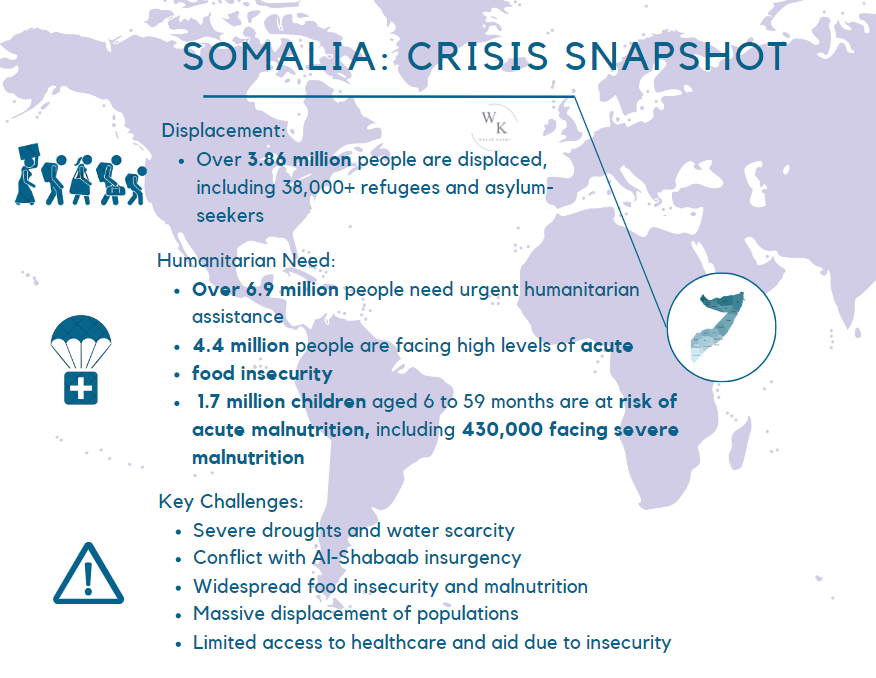
Somalia’s humanitarian crisis is driven by a combination of conflict and climate change, making it one of the most severe emergencies in 2024. The country is experiencing its worst drought in 40 years, which the Minister of Health has described as the most severe and prolonged drought in Somalia’s history. As the drought continues, livestock has died, crops have failed, and water sources have dried up, leaving 8.3 million people in urgent need of humanitarian aid. The situation is further worsened by the Al-Shabaab insurgency, which continues to destabilize large regions of the country. Al-Shabaab’s control over key areas obstructs the delivery of much-needed aid, placing millions at risk. In early 2024, the group displaced over 25,000 people, contributing to a broader displacement crisis, which now includes 3.8 million internally displaced persons.
Children are particularly affected, with 1.7 million under the age of five suffering from acute malnutrition and 430,000 at risk of severe malnutrition if aid is not delivered quickly. This adds to the 3.6 million people already facing acute food insecurity. The fragile healthcare system is overwhelmed by the surge of IDPs seeking medical treatment. Meanwhile, waterborne diseases like cholera are spreading due to a lack of clean water, with 4,388 confirmed cases and 54 deaths in 2024 alone. These factors highlight the urgent need for international aid to prevent the crisis from worsening further.
7- Afghanistan
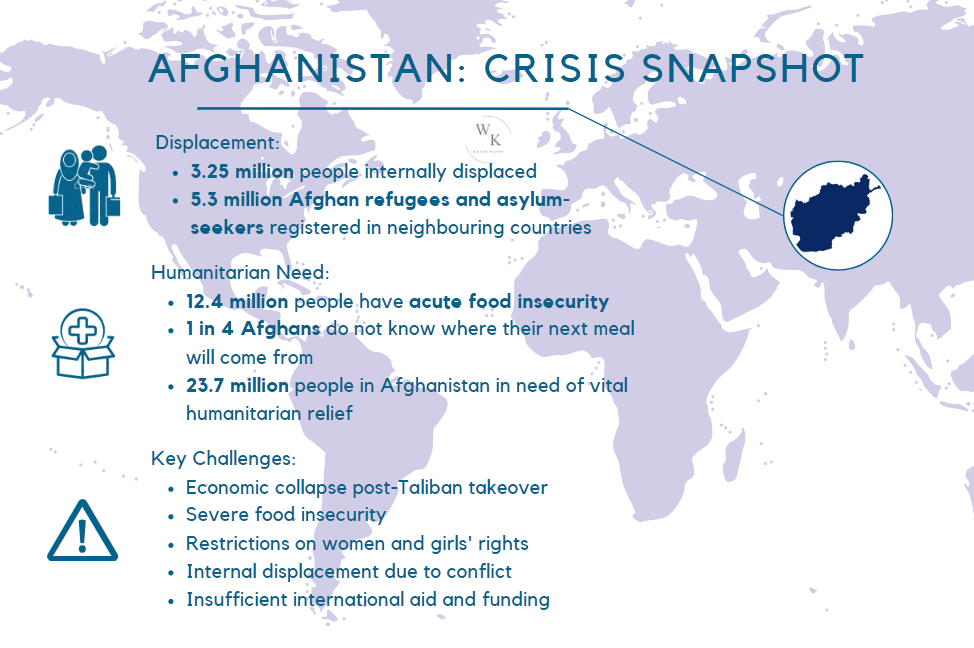
Afghanistan’s humanitarian crisis has continued to worsen in 2024, with more than 23.7 million people in need of humanitarian assistance due to political instability and frequent natural disasters. The Taliban’s return to power has exacerbated existing challenges, leading to widespread poverty, food insecurity, and a lack of access to essential services. The World Food Programme reports that 15.3 million people face acute food insecurity, with the harsh winter months threatening to further isolate already vulnerable communities. Additionally, the economic collapse has severely hampered humanitarian efforts, with over 6.3 million people internally displaced due to conflict and environmental disasters.
The healthcare system in Afghanistan is also in crisis. The World Health Organization warns that malnutrition rates have surpassed emergency thresholds, affecting nearly half of all children under five and a significant portion of pregnant and breastfeeding women. The collapse of healthcare services and the ongoing food crisis leaves millions without access to basic medical care. Furthermore, with limited funding and the country’s isolation on the global stage, humanitarian organizations, including the International Federation of Red Cross and Red Crescent Societies, are struggling to meet the overwhelming needs of the Afghan population.
8- Democratic Republic of Congo (DRC)
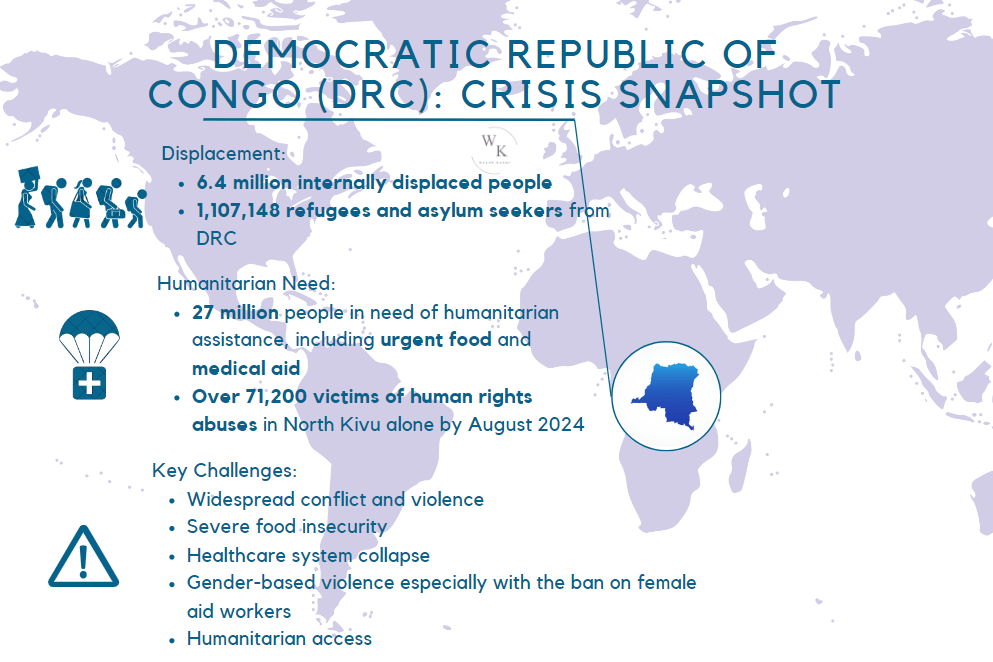
On the 30th of September 2024, UNHCR sounded the alarm about the worsening humanitarian situation in the DRC, which is largely a result of the ongoing conflict and human rights violations. Over 6.4 million people are currently displaced within their own country, and data shows that more than 940.000 people were forced to flee their homes just in the first half of 2024 alone. The eastern provinces, particularly North and South Kivu and Ituri, have been hit hardest, with armed groups carrying out violent attacks on civilians. Human rights violations, including gender-based violence, are rampant, with women and children often the primary victims. UNHCR has raised alarms over the atrocities that have continued to affect the civilian population, warning that even those seeking safety in displacement camps face grave dangers.
In addition to the violence, food insecurity and health crises are pervasive. The DRC is facing one of the world’s largest hunger emergencies, with over 27 million people in need of humanitarian assistance. The situation is compounded by outbreaks of diseases such as cholera and measles, which thrive in the overcrowded and unsanitary conditions of displacement camps. Access to clean water and healthcare remains limited, particularly in remote areas, leaving millions of people vulnerable to preventable diseases. As the situation continues to deteriorate, international aid is essential to address both the immediate needs of those affected and the root causes of the ongoing violence and instability.
9- South Sudan
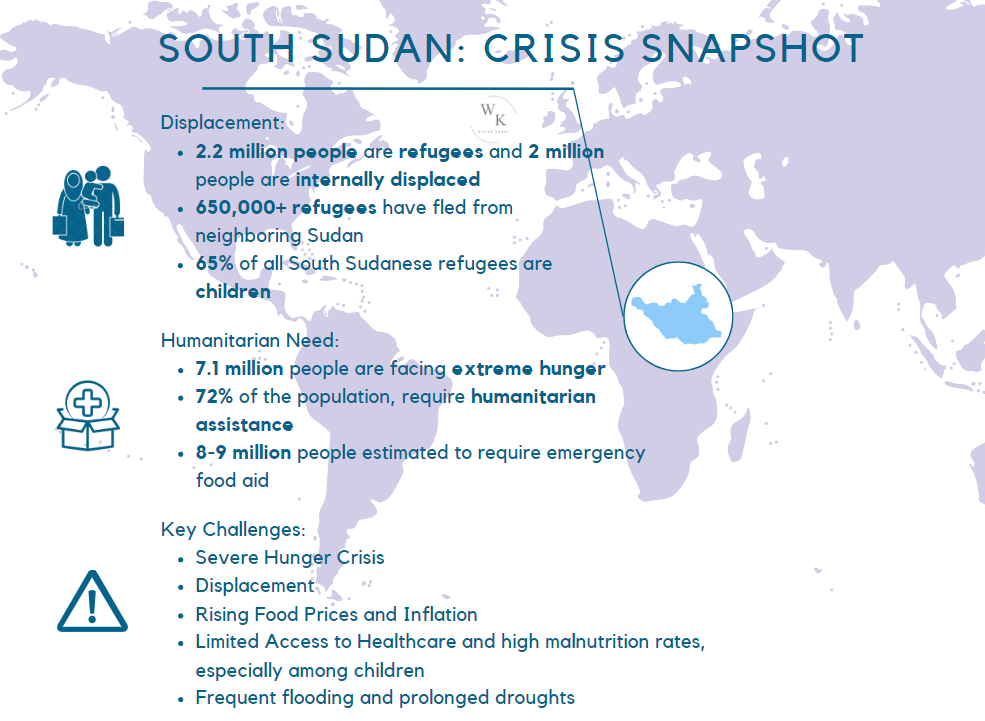
South Sudan is on the crisis watch of many international humanitarian organizations due to the current environmental situation and the spillover effects of the war in neighboring Sudan. More than 7.1 million people are facing extreme hunger, exacerbated by continuous flooding, drought, and economic instability. The recent influx of over 650,000 refugees fleeing the conflict in Sudan has placed additional pressure on South Sudan’s already overstretched resources. With many areas submerged due to recurrent floods and others suffering from drought, farmers can no longer produce sufficient food, pushing millions closer to famine.
The conflict in Sudan has also contributed to skyrocketing food prices and hyperinflation, which, combined with South Sudan’s fragile economy, threatens to push an additional 1 million people into extreme hunger. Moreover, 2 million people remain internally displaced due to ongoing violence and climatic disasters. Access to basic healthcare and nutrition remains critical, with malnutrition rates rising, especially among children under five and pregnant women. Humanitarian organizations, such as the World Food Programme and UNHCR, are providing life-saving food and aid, but the situation is dire, and without sustained international support, the crisis is expected to worsen.
10- Ethiopia
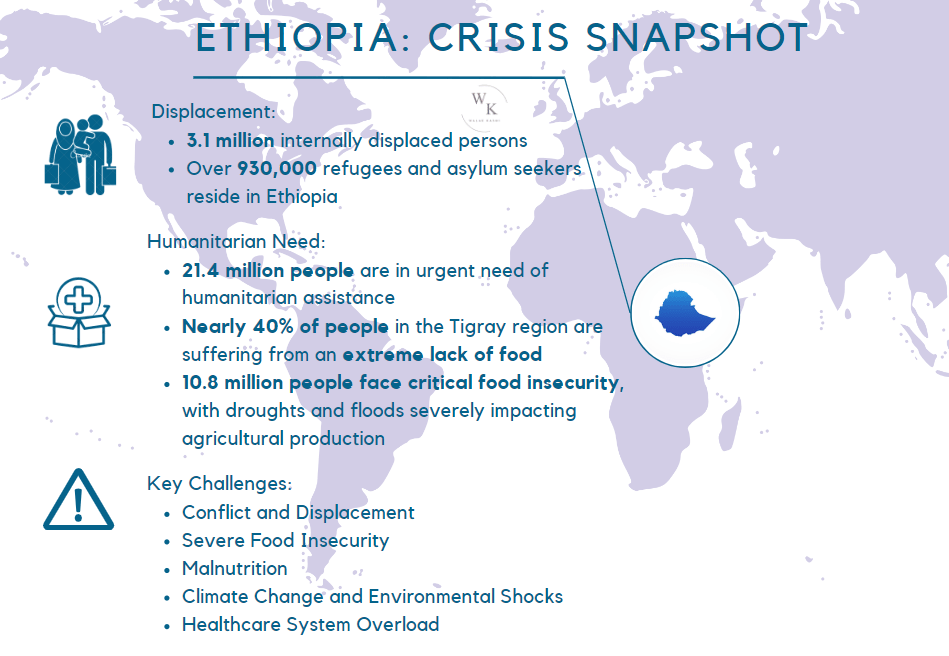
Overlapping crises, including conflicts, natural hazards, and epidemic outbreaks, puts Ethiopia on our list. The ceasefire in the Tigray region since November 2022 has brought some relief, but tensions and conflict persist in other regions, including Oromia and the Somali region. More than 21.4 million people are in urgent need of humanitarian assistance, including 3.1 million internally displaced persons who have been forced to flee due to violence and environmental disasters. The situation is further worsened by climate shocks, such as the prolonged drought and severe flooding that continue to ravage farmlands, destroy homes, and displace communities.
Food insecurity remains a significant challenge, with 10.8 million people facing critical food shortages due to the combined effects of climate change and conflict. Malnutrition rates have soared, especially in the Somali and Afar regions, where many children under five are suffering from severe acute malnutrition. Outbreaks of diseases like cholera are spreading, further straining the country’s already fragile healthcare system. Ethiopia’s humanitarian response plan 2024, which seeks to address these issues, has received only a fraction of the funding needed, underscoring the need for continued international support to prevent further deterioration.
The crises in Somalia, Afghanistan, the DRC, South Sudan, and Ethiopia represent some of the world’s most urgent humanitarian challenges. These regions are not only grappling with conflict and political instability, but they are also battling food insecurity, displacement, and a lack of essential services. Global attention and resources are critical to addressing these emergencies and preventing further loss of life. In Part 3, we will continue to explore other global crises that demand our focus.
Note: The crisis snapshots in this blog were created by Walae Kasmi, drawing from various credible resources such as UNHCR, IOM, the Migration Data Portal, IRC, ReliefWeb, and reports from various UN agencies to bring you reliable data that illustrates the depth of the humanitarian challenges discussed.
For more information about Somalia, check:
https://www.rescue.org/eu/country/somalia
https://www.hrw.org/world-report/2024/country-chapters/somalia
https://data.unhcr.org/en/country/som
For more information about Afghanistan, check:
https://www.rescue.org/article/crisis-afghanistan-what-you-need-know-and-how-help
https://www.unocha.org/afghanistan
https://www.unhcr.org/emergencies/afghanistan-emergency
For more information about DRC, check:
https://www.iom.int/news/world-must-not-ignore-dr-congos-worsening-humanitarian-crisis-iom
https://www.rescue.org/article/crisis-drc-what-you-need-know-and-how-help
For more information about South Sudan, check:
https://www.unocha.org/south-sudan
https://reporting.unhcr.org/operational/situations/south-sudan-situation
https://www.rescue.org/country/south-sudan
For more information about Ethiopia, check:
https://www.unhcr.org/emergencies/ethiopia-tigray-emergency
https://www.rescue.org/article/crisis-ethiopia-what-you-need-know-and-how-help




 Your Global Compass
Leave a comment